
Table of Contents
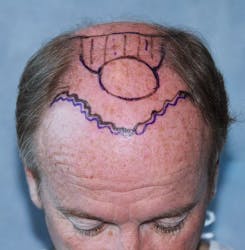 Male pattern baldness commonly refers to the receding hairline and loss of hair in the crown or lower portion of the head. Hair loss in men can be traced to genetics. If your grandfather’s side of the family, your grandmother’s side of the family, your father’s side of the family, or your mother’s side of the family experienced male pattern baldness, chances are that you will also inherit this trait. With that in mind, there have been many advances in the field of hair restoration over the years, and Dr. Bernardino Arocha offers an array of surgical hair replacement options that can yield extraordinarily natural-looking results.
The incidence of baldness in men increases with age. The percentage of men 25 to 30 years of age affected by MPB is about 25%. The rate increases to 40% of men aged 40 and 50% of men aged 50 years or older. Androgenetic Alopecia is the medical term for male pattern baldness (MPB). This is the most common type of hair loss that occurs in men, and it is a condition that can be inherited from either side of the family. What is inherited is a certain pattern of hair distribution in which the hair is sensitive to the presence of a male hormone breakdown product called DHT.
After puberty, the male hormone testosterone surges, hence DHT surges. Under the influence of DHT, the hair is progressively miniaturized until it is just fine hair without pigment (vellus hair). This state where the pigmented thick hairs are converted to vellus invisible hairs is the common bald state in men.
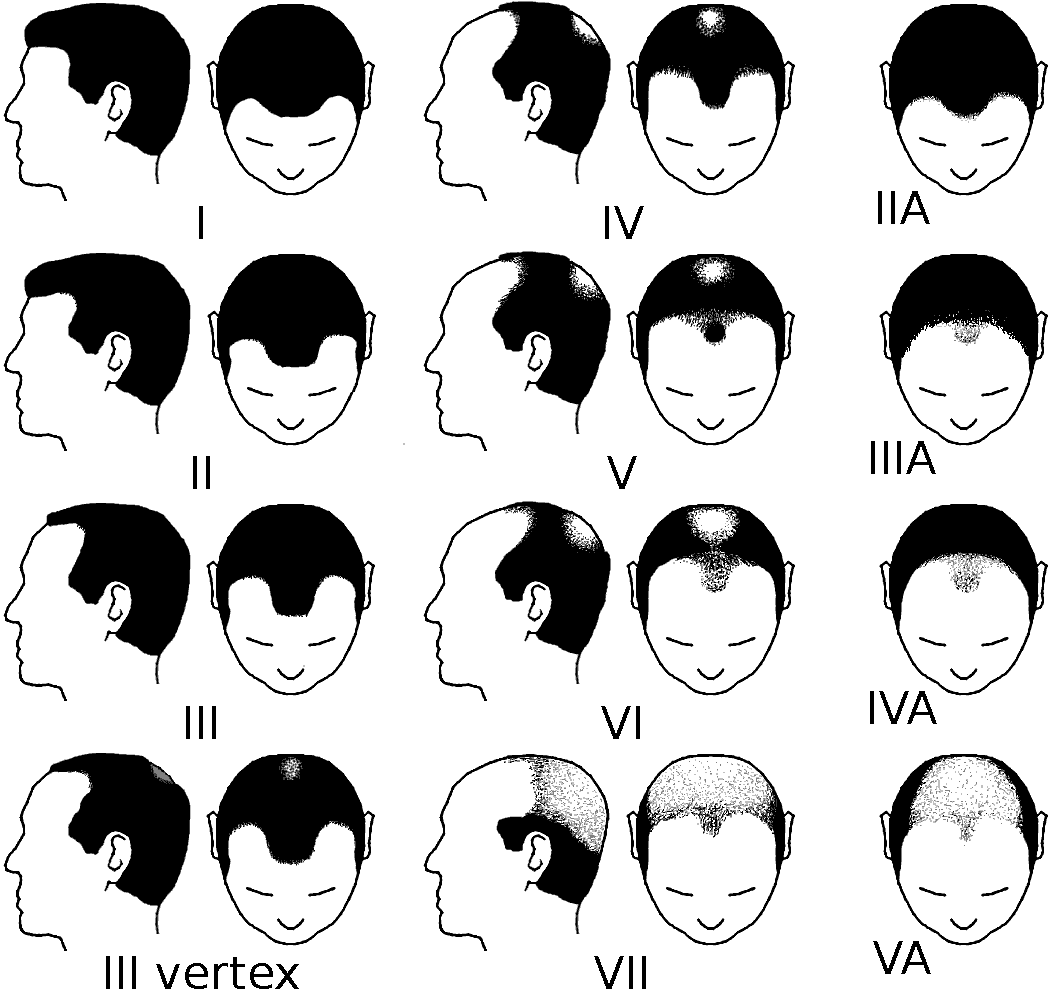
Learn more about The Norwood Hair Scale.
In male pattern baldness, the follicles on the lower back area and on the sides of the head are typically not affected by the DHT hormone. Since these areas often continue to grow healthy and plentiful strands of hair, they make it possible for surgical hair transplantation utilizing your own hair follicles.
Hair loss is a very common condition and there are a number of causes that have been associated with it in addition to genetic factors. These include iron deficiencies, protein deficiencies, severe and/or chronic illnesses, certain medications, and even damage caused by improper hair care. The good news is, there is an early male pattern baldness treatment available from Dr. Arocha that can effectively restore lost hair and help you feel more confident about your appearance.
If you would like more information on hair replacement options, or if you would like to schedule a complimentary consultation with Dr. Arocha, please contact us today.
Since 2002, Bernardino A. Arocha, M.D. has been transforming lives through the power of hair restoration. With an artistic approach and a variety of procedures available, Arocha Hair Restoration has a track record of providing stunning results. Dr. Arocha is affiliated with prominent organizations with memberships that include:
If you're ready for a full head of hair, we invite you to contact us with our form or call us at (713) 526-4247.